
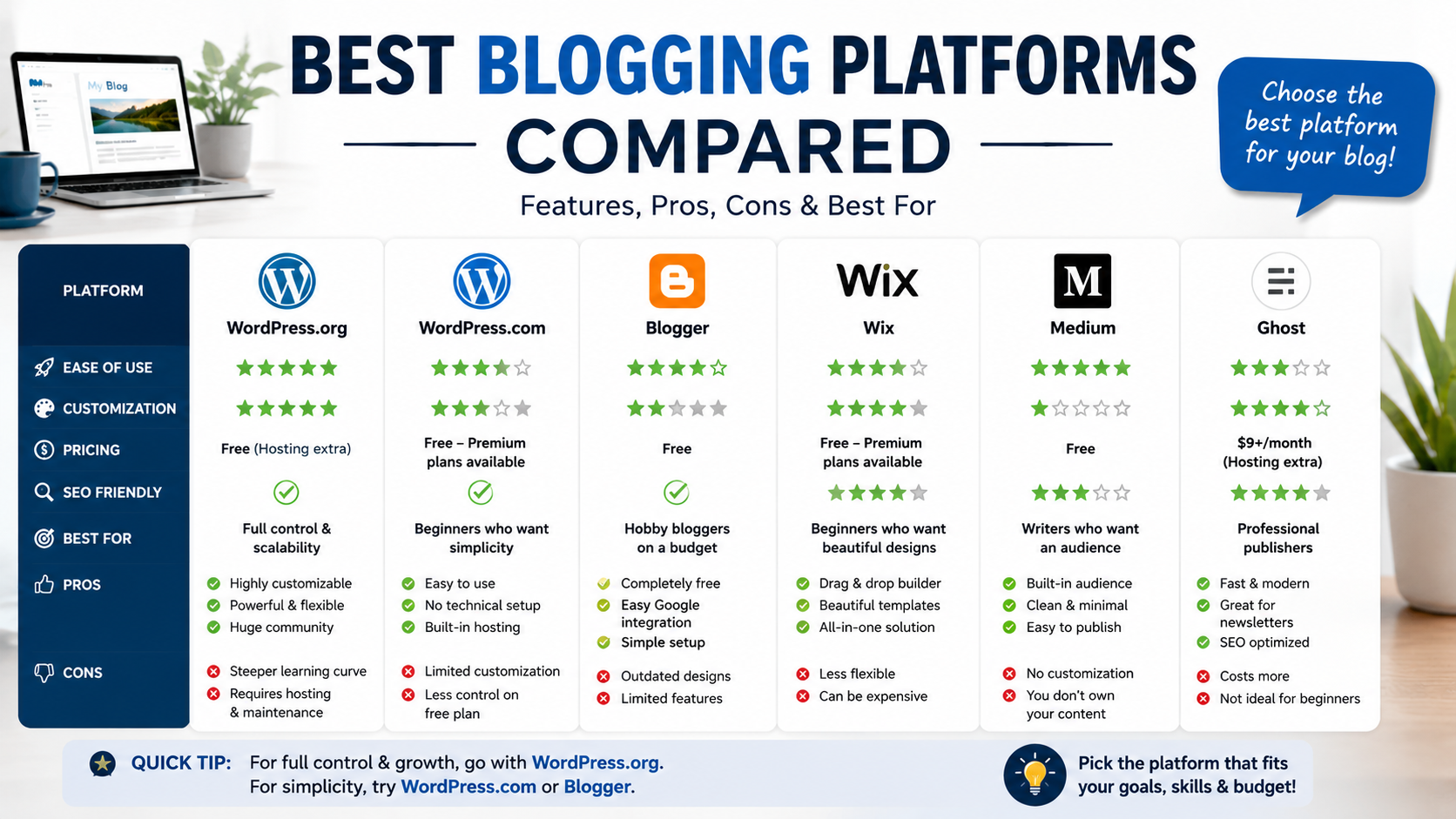
Compare the best blogging platforms in 2026. Learn the pros, cons, pricing, features, and ideal use cases of WordPress, Blogger, Wix, Squarespace, Medium, Ghost, and more to choose the right platform for your blog.
Choosing the right blogging platform is one of the most important decisions you’ll make when starting a blog. The platform you select affects your website’s design, performance, SEO capabilities, customization options, and future growth.
Some platforms are designed for beginners who want an easy setup, while others provide advanced features for professional bloggers and businesses. In this guide, we’ll compare the most popular blogging platforms to help you find the one that best fits your goals.
What Makes a Good Blogging Platform?
Before choosing a platform, consider these important factors:
- Easy to use
- SEO-friendly
- Mobile responsive
- Customization options
- Fast loading speed
- Security features
- Reliable customer support
- Scalability for future growth
WordPress.org
WordPress.org is the world’s most popular blogging platform and powers millions of websites.
Advantages
- Full control over your website
- Thousands of free and premium themes
- Large plugin library
- Excellent SEO capabilities
- Highly customizable
- Suitable for blogs of all sizes
Disadvantages
- Requires separate web hosting
- Slight learning curve for beginners
- Responsible for updates and maintenance
Best For
- Professional bloggers
- Businesses
- Content creators
- Affiliate marketers
- Long-term website growth
Blogger
Blogger is Google’s free blogging platform.
Advantages
- Completely free
- Easy to set up
- Google account integration
- No hosting management
- Reliable infrastructure
Disadvantages
- Limited customization
- Fewer themes
- Limited advanced features
- Less flexibility than WordPress
Best For
- Hobby bloggers
- Beginners
- Personal journals
Wix
Wix is a website builder with built-in blogging features.
Advantages
- Drag-and-drop editor
- Beginner-friendly
- Attractive templates
- Built-in hosting
- No coding required
Disadvantages
- Limited flexibility compared to WordPress
- Some advanced features require paid plans
- Difficult to migrate later
Best For
- Small businesses
- Personal websites
- Beginners
Squarespace
Squarespace combines professional website design with blogging tools.
Advantages
- Beautiful templates
- Mobile responsive designs
- Built-in hosting
- Easy content management
- Good security
Disadvantages
- Monthly subscription required
- Smaller extension library
- Less customization than WordPress
Best For
- Creative professionals
- Photographers
- Designers
- Portfolio websites
Medium
Medium focuses entirely on publishing written content.
Advantages
- No technical setup
- Built-in audience
- Clean reading experience
- Simple publishing
- Free to start
Disadvantages
- Limited branding
- No complete ownership
- Limited monetisation control
- Few customization options
Best For
- Writers
- Journalists
- Personal storytelling
Ghost
Ghost is designed for professional publishing and newsletters.
Advantages
- Fast performance
- Clean interface
- Built-in memberships
- Excellent writing experience
- SEO-friendly
Disadvantages
- Smaller ecosystem
- Fewer themes
- Requires technical knowledge for self-hosting
Best For
- Professional publishers
- Membership websites
- Newsletter creators
Webflow
Webflow combines website design with content management.
Advantages
- Powerful visual editor
- Responsive design
- Professional appearance
- Good CMS features
- Clean code
Disadvantages
- Steeper learning curve
- Higher pricing for advanced plans
- More suitable for designers
Best For
- Agencies
- Designers
- Advanced users
Tumblr
Tumblr is a social blogging platform.
Advantages
- Free to use
- Community features
- Easy publishing
- Multimedia support
- Mobile-friendly
Disadvantages
- Limited SEO
- Less professional
- Fewer business features
Best For
- Casual bloggers
- Creative communities
- Personal blogs
Key Factors to Consider Before Choosing
Ease of Use
Beginners often benefit from platforms with simple dashboards and easy publishing tools.
SEO Features
Choose a platform that allows:
- Custom meta descriptions
- SEO-friendly URLs
- Fast loading speeds
- Mobile optimisation
- Structured headings
Customization
If you plan to build a unique brand, choose a platform with flexible design options.
Budget
Some platforms are free, while others require monthly subscriptions or hosting costs.
Consider:
- Domain registration
- Hosting
- Themes
- Plugins
- Premium features
Monetisation
If earning income is a goal, ensure your chosen platform supports:
- Advertising
- Affiliate marketing
- Sponsored posts
- Digital products
- Memberships
Which Platform Is Best for Beginners?
For most beginners:
- WordPress.org offers the greatest flexibility and long-term growth potential.
- Blogger is suitable for those wanting a free and simple solution.
- Wix is ideal for users who prefer drag-and-drop website building.
- Medium is excellent for writers who simply want to publish articles without managing a website.
Common Mistakes When Choosing a Blogging Platform
Avoid these common mistakes:
- Choosing based only on price
- Ignoring SEO capabilities
- Not considering future growth
- Overlooking customization options
- Choosing a platform that’s difficult to migrate from
- Ignoring customer support
- Not checking monetisation options
- Selecting a platform that doesn’t fit your goals
Sources
- https://wordpress.org
- https://www.blogger.com
- https://www.wix.com
- https://www.squarespace.com
- https://medium.com
- https://ghost.org
- https://webflow.com
Conclusion
The best blogging platform depends on your experience, budget, and long-term objectives. If you want complete control, excellent SEO, and unlimited customization, WordPress.org remains one of the strongest choices. Beginners looking for simplicity may prefer Blogger or Wix, while writers who want a built-in audience may enjoy Medium. Creative professionals often appreciate Squarespace, and publishers focused on memberships may find Ghost to be an excellent solution.
Take time to evaluate your needs before making a decision, as choosing the right platform from the beginning can save time and make future growth much easier.
Frequently Asked Questions (FAQs)
1. Which blogging platform is best for beginners?
WordPress.org, Blogger, and Wix are among the most beginner-friendly platforms, depending on your needs and technical experience.
2. Is WordPress better than Blogger?
WordPress offers significantly more flexibility, customization, and scalability, while Blogger is easier to start with and is free.
3. Can I make money from a blog on any platform?
Many platforms support monetisation, but WordPress provides the greatest flexibility for advertising, affiliate marketing, and selling products.
4. Do I need coding skills to start a blog?
No. Most modern blogging platforms allow users to create and manage blogs without coding knowledge.
5. Which platform has the best SEO features?
WordPress is widely recognised for its powerful SEO capabilities when properly configured.
6. Is Medium good for professional blogging?
Medium is excellent for publishing articles and reaching readers, but it offers limited branding and monetisation control compared to owning your own website.
7. Should I choose a free or paid blogging platform?
Free platforms are suitable for beginners, while paid platforms generally provide greater control, professional branding, and long-term growth opportunities.
8. Can I switch blogging platforms later?
Yes, but migrating content and maintaining SEO can require additional time and effort. Choosing the right platform from the beginning is usually the better approach.