
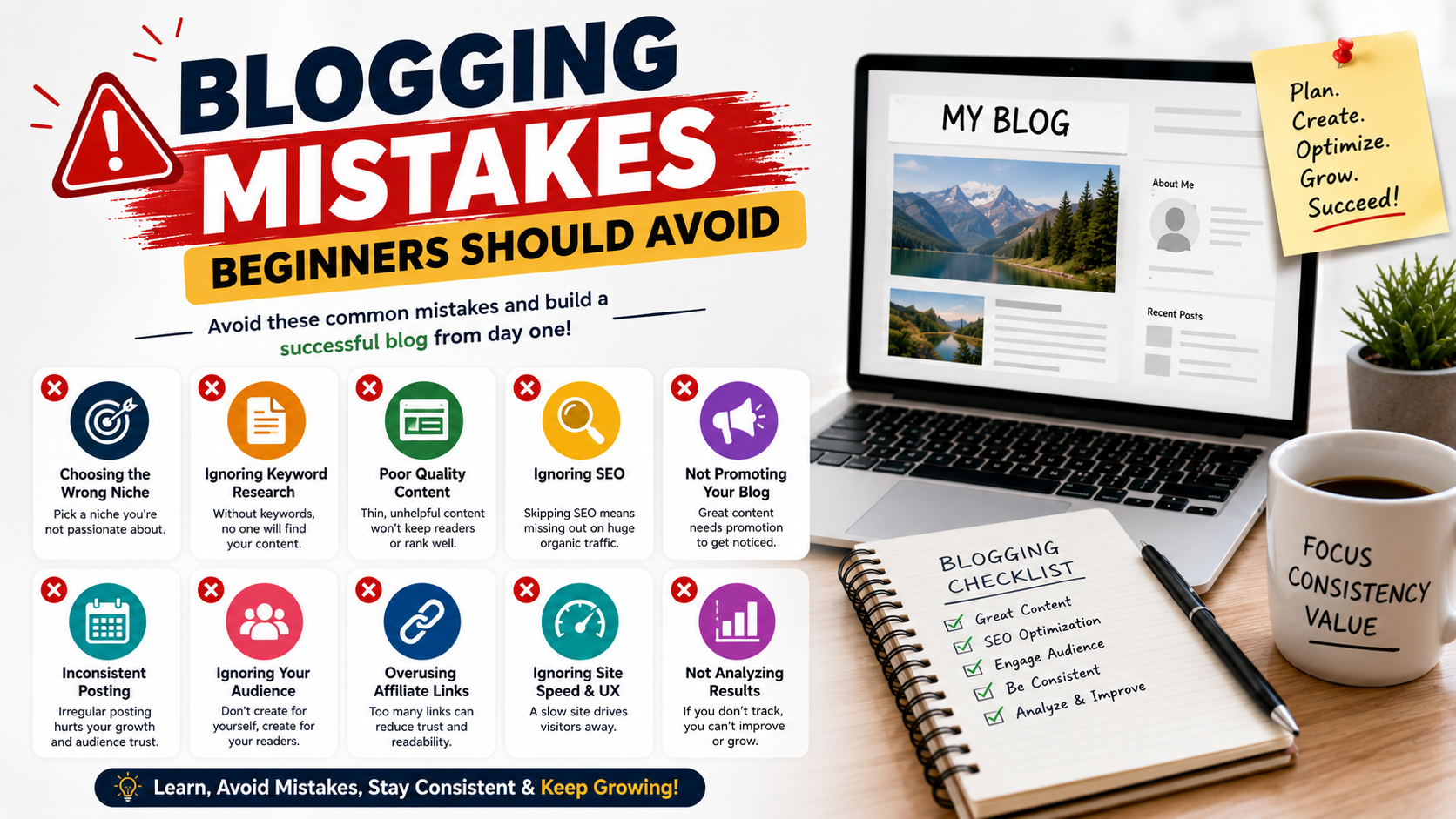
Discover the most common blogging mistakes beginners should avoid in 2026. Learn practical tips to improve your content, SEO, website performance, and blogging strategy for long-term success.
Starting a blog is easier than ever, but building a successful one takes planning, patience, and consistency. Many new bloggers become discouraged because they expect immediate results or make avoidable mistakes that limit their growth.
The good news is that most blogging mistakes can be prevented with the right knowledge. By understanding what not to do, you can create better content, attract more readers, improve your search engine rankings, and build a blog that continues to grow over time.
This guide explains the most common blogging mistakes beginners should avoid and how to overcome them.
Choosing the Wrong Niche
One of the biggest mistakes is selecting a niche simply because it appears profitable.
Instead, choose a niche that:
- Matches your interests
- Has long-term content opportunities
- Solves readers’ problems
- Has a growing audience
A niche you genuinely enjoy will make it much easier to stay motivated and publish consistently.
Expecting Instant Results
Many beginners believe their blog will receive thousands of visitors within a few weeks.
In reality, successful blogs usually take months or even years to build consistent traffic.
Focus on:
- Publishing quality articles
- Improving your skills
- Learning SEO
- Building trust with readers
Patience is one of the most important qualities of a successful blogger.
Ignoring Search Engine Optimisation (SEO)
Writing great content alone is not always enough if people cannot find it.
Basic SEO practices include:
- Using relevant keywords naturally
- Writing descriptive headings
- Creating helpful meta descriptions
- Adding internal links
- Optimising images
- Improving page speed
Learning SEO early gives your blog a better chance of appearing in search engine results.
Publishing Low-Quality Content
Some beginners focus on publishing many articles quickly rather than creating useful content.
Quality content should be:
- Original
- Accurate
- Well-structured
- Easy to read
- Helpful
- Updated regularly
One valuable article often performs better than several poorly written posts.
Posting Inconsistently
Publishing several articles one week and then disappearing for months can slow your blog’s growth.
Create a realistic publishing schedule, such as:
- One article each week
- Two articles each week
- One in-depth guide every two weeks
Consistency helps readers and search engines know your blog is active.
Not Understanding Your Audience
Writing without considering your readers often results in content that receives little engagement.
Ask yourself:
- What problems are readers trying to solve?
- What questions do they ask?
- What information do they need?
Creating content that answers real questions builds trust and encourages repeat visits.
Ignoring Mobile Users
Most internet users browse websites on smartphones.
Ensure your blog:
- Loads quickly
- Uses responsive design
- Has readable text
- Displays images properly
- Is easy to navigate on smaller screens
A mobile-friendly website improves both user experience and SEO.
Using Too Many Advertisements
Displaying excessive advertisements can make a website difficult to use.
Too many ads may:
- Slow down the website
- Distract readers
- Reduce trust
- Increase bounce rates
Balance monetisation with a positive user experience.
Forgetting to Promote Your Content
Publishing an article is only the first step.
Promote your blog through:
- Social media
- Email newsletters
- Online communities
- Guest posting
- Professional networking
Promotion helps new readers discover your content.
Neglecting Website Speed
Slow-loading websites often lose visitors before pages fully load.
Improve speed by:
- Compressing images
- Using reliable hosting
- Removing unnecessary plugins
- Enabling caching
- Keeping themes lightweight
A faster website creates a better experience for visitors.
Not Building an Email List
Many beginners focus only on search engine traffic.
Building an email list allows you to:
- Notify readers about new articles
- Share exclusive content
- Build long-term relationships
- Increase repeat visitors
Email marketing remains one of the most effective ways to grow an audience.
Copying Other Blogs
Copying content from other websites can damage your reputation and may create legal and SEO problems.
Instead:
- Share your own experiences
- Research thoroughly
- Offer unique perspectives
- Create original content
Search engines value originality.
Ignoring Analytics
Without tracking your blog’s performance, it becomes difficult to know what works.
Monitor metrics such as:
- Organic traffic
- Popular articles
- Bounce rate
- Time on page
- Returning visitors
These insights help improve your content strategy.
Using Poor Website Design
A confusing or outdated design can drive visitors away.
Keep your blog:
- Clean
- Simple
- Easy to navigate
- Mobile-friendly
- Fast-loading
Good design improves the overall reading experience.
Giving Up Too Soon
Perhaps the biggest mistake is quitting before your blog has time to grow.
Most successful bloggers spent months creating content before seeing significant traffic.
Stay focused on:
- Learning
- Improving
- Publishing consistently
- Helping readers
Long-term consistency often leads to long-term success.
Common Blogging Habits That Lead to Success
Successful bloggers usually:
- Publish regularly.
- Continue learning SEO.
- Update older content.
- Listen to reader feedback.
- Improve website speed.
- Build email subscribers.
- Stay patient.
- Focus on providing value.
Developing these habits increases your chances of growing a successful blog.
Sources
- https://wordpress.org
- https://developers.google.com/search
- https://search.google.com/search-console
- https://developers.google.com/web
- https://blog.google
Conclusion
Every new blogger makes mistakes, but learning from them early can save time and accelerate your progress. By choosing the right niche, creating high-quality content, understanding SEO, maintaining a consistent publishing schedule, and focusing on your readers, you can build a blog that continues to grow over time.
Remember that blogging is a long-term journey. Success comes from continuous learning, consistent effort, and a genuine desire to help your audience rather than chasing quick results.
Frequently Asked Questions (FAQs)
1. What is the biggest mistake beginner bloggers make?
One of the biggest mistakes is expecting immediate traffic and giving up before the blog has time to grow.
2. How often should I publish blog posts?
A consistent schedule, such as one or two quality articles each week, is generally more effective than publishing irregularly.
3. Is SEO important for blogging?
Yes. SEO helps search engines understand your content and can increase your chances of receiving organic traffic.
4. Should I focus on quality or quantity?
Quality should always come first. Helpful, well-written articles usually perform better over time than a large number of low-quality posts.
5. How can I attract more visitors to my blog?
Create valuable content, optimise for SEO, promote your articles through social media and email, and publish consistently.
6. Is it okay to copy ideas from other blogs?
You can research topics for inspiration, but your content should always be original and provide your own insights or perspective.
7. How long does it take for a blog to become successful?
Every blog is different, but many take several months or longer to build consistent traffic and authority.
8. Should I monetise my blog immediately?
It’s often better to focus on creating valuable content and growing your audience before adding multiple monetisation methods.