
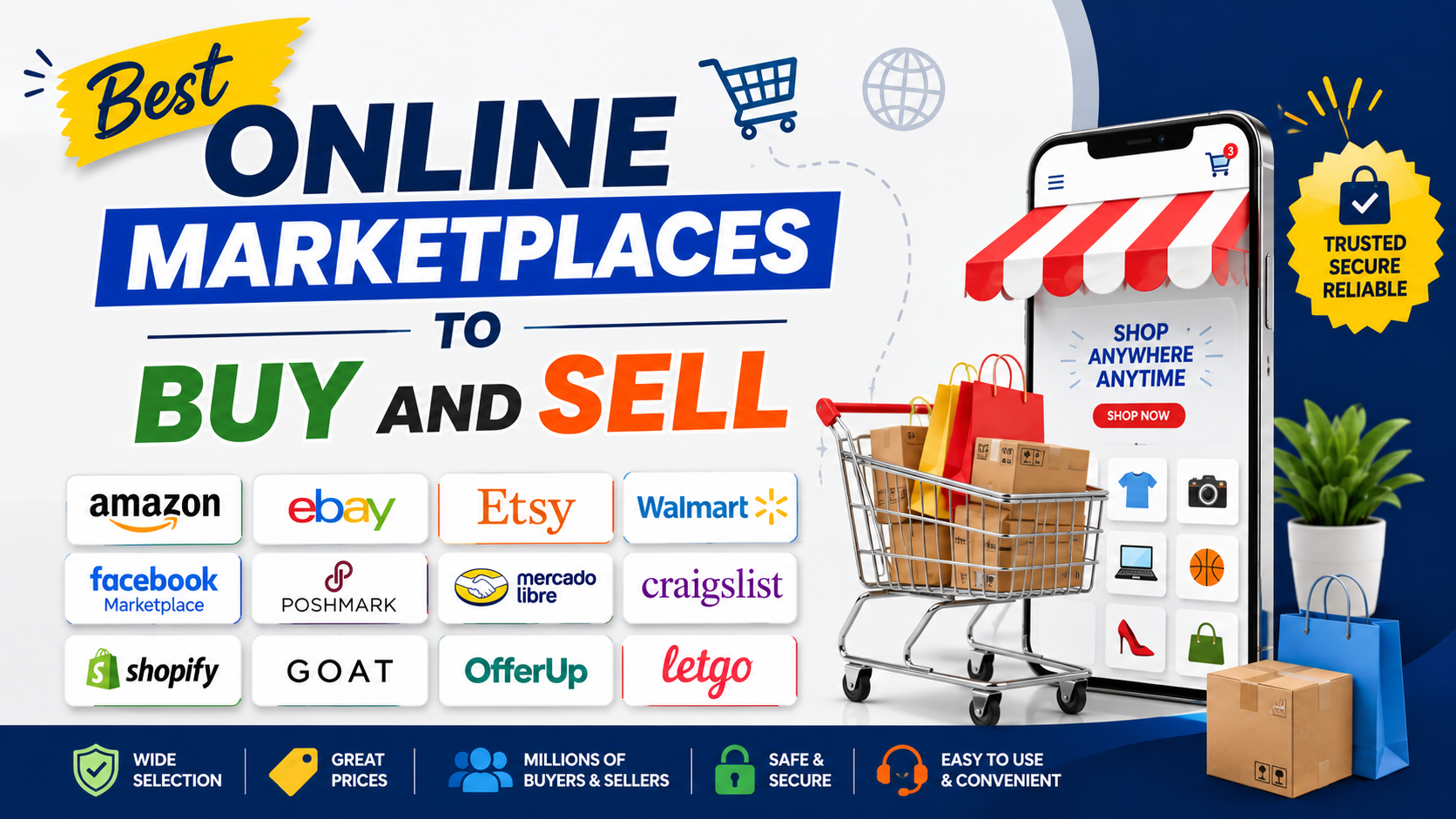
Discover the best online marketplaces to buy and sell products in 2026. Compare Amazon, eBay, Etsy, Facebook Marketplace, and other platforms for buyers and sellers.
Online marketplaces have completely changed the way people buy and sell products. Instead of visiting physical stores or depending only on local customers, buyers and sellers can now connect through digital platforms from almost anywhere. Whether you want to purchase electronics, clothing, handmade products, furniture, books, collectibles, or everyday household items, there is likely an online marketplace designed for your needs.
For sellers, online marketplaces provide access to a large customer base without requiring them to build a complete e-commerce website from scratch. Platforms such as Amazon, eBay, Etsy, and Facebook Marketplace allow individuals, small businesses, creators, and established brands to list products and reach potential customers.
However, every marketplace is different. Some are better for new products, while others are ideal for used goods. Some specialize in handmade and creative products, whereas others focus on general merchandise. Fees, shipping options, seller tools, customer protection, and audience size can also vary considerably.
This guide explores the best online marketplaces to buy and sell, their major features, advantages, disadvantages, and tips for choosing the right platform.
What Is an Online Marketplace?
An online marketplace is a digital platform where multiple sellers can offer products or services to customers. Instead of being operated by one individual seller, the marketplace brings together many independent sellers and buyers.
Examples include platforms such as Amazon, eBay, Etsy, and Facebook Marketplace.
The marketplace usually provides important infrastructure such as:
- Product listings
- Search and filtering
- Customer accounts
- Payment processing
- Reviews and ratings
- Communication tools
- Order management
- Sometimes shipping and fulfillment services
For buyers, marketplaces make it easier to compare products, prices, ratings, and sellers in one place.
For sellers, they provide an existing audience and technical infrastructure that can reduce the difficulty of starting an online business.
Why Are Online Marketplaces Popular?
The popularity of online marketplaces comes from convenience and accessibility.
1. Large Customer Base
Popular marketplaces already attract millions of shoppers. Sellers can potentially reach customers without spending years building website traffic.
2. Easy Product Discovery
Customers can search for specific products, compare prices, read reviews, and make purchasing decisions quickly.
3. Convenient Selling
Many marketplaces provide seller dashboards where businesses can manage inventory, orders, pricing, and customer communication.
4. Multiple Product Categories
Large marketplaces offer everything from electronics and clothing to books, home products, beauty items, and collectibles.
5. Payment and Order Support
Established marketplaces generally provide integrated payment systems and order-management tools, making transactions easier for both sides.
1. Amazon
Amazon is one of the world’s best-known online marketplaces. It offers a massive selection of products and serves both individual and professional sellers.


7
Amazon is particularly suitable for sellers who want to reach a broad audience with new products. Depending on the market and seller program, sellers can use fulfillment and shipping services to simplify delivery.
Amazon India states that seller charges can include category-based referral fees, closing fees, weight-handling or shipping fees, and other applicable service charges.
Best For
- New products
- Electronics
- Clothing
- Home products
- Books
- Beauty products
- Established businesses
- Small businesses looking for broad reach
Advantages
- Huge customer base
- Wide range of product categories
- Strong search and product discovery
- Seller tools
- Multiple fulfillment options
Disadvantages
- Competition can be intense
- Seller fees vary
- Pricing pressure can affect margins
- Sellers must follow marketplace policies
2. eBay
eBay is another major online marketplace and is especially well known for auctions, collectibles, refurbished products, used goods, and unique items.


6
One of eBay’s biggest advantages is its flexibility. Sellers can offer products using different listing formats, while buyers can find both everyday products and hard-to-find items.
Best For
- Used products
- Collectibles
- Electronics
- Vintage products
- Hobby items
- Rare products
- Auction-style selling
Advantages
- Strong marketplace recognition
- Good for unique products
- Auction functionality
- International reach
- Suitable for both new and used products
Disadvantages
- Seller fees can vary
- Shipping needs careful management
- Competition can be significant
eBay can be particularly attractive when the product’s value depends on rarity, condition, demand, or collector interest.
3. Etsy
Etsy is designed primarily around handmade, creative, vintage, personalized, and unique products.


6
For artists, designers, craft makers, jewelry businesses, personalized-product sellers, and creative entrepreneurs, Etsy can be an attractive platform.
Etsy currently charges sellers listing and transaction fees, with additional fees potentially applying depending on services and location. Its published fee information says listings carry a $0.20 USD listing fee and transactions generally have a 6.5% transaction fee, while payment processing varies by country.
Best For
- Handmade products
- Jewelry
- Artwork
- Personalized gifts
- Crafts
- Digital designs
- Vintage products
Advantages
- Targeted audience
- Strong focus on creative products
- Shop customization
- Good for small creative businesses
Disadvantages
- Seller fees
- Competition within popular categories
- Product photography and branding are important
If your products are handmade or highly creative, Etsy may be more suitable than a general marketplace.
4. Facebook Marketplace
Facebook Marketplace is particularly useful for local buying and selling.


6
People commonly use it to sell furniture, electronics, vehicles, household products, clothing, and other items they no longer need.
Best For
- Used furniture
- Electronics
- Household goods
- Local sales
- Second-hand products
- Items that are difficult or expensive to ship
Advantages
- Easy product discovery
- Useful for local transactions
- Good for second-hand products
- Social-network integration
- Convenient communication between buyers and sellers
Disadvantages
- Buyer and seller quality can vary
- Scams can occur
- Local transactions require caution
- Shipping and payment arrangements may differ
When using local marketplaces, buyers should meet in safe public locations where appropriate and avoid sharing unnecessary personal information.
5. Walmart Marketplace
Walmart Marketplace allows third-party sellers to list products alongside Walmart’s own retail offerings.
It can be useful for established sellers that want to expand their online reach.
Best For
- Consumer products
- Household goods
- Electronics
- Clothing
- Everyday products
- Established brands
Advantages
- Recognizable retail brand
- Large customer audience
- Multiple product categories
- Business-oriented selling tools
Disadvantages
- Seller requirements
- Competition
- Marketplace policies
- Availability and terms vary by country
6. Depop
Depop focuses heavily on fashion resale and style-driven shopping.
It is especially popular among people interested in second-hand fashion, vintage clothing, streetwear, and unique styles.
Best For
- Second-hand clothing
- Vintage fashion
- Streetwear
- Accessories
- Fashion-focused products
Advantages
- Fashion-oriented audience
- Good for unique clothing
- Social and visual shopping experience
Disadvantages
- Primarily suited to fashion
- Product presentation is important
- Competition can be high in popular styles
7. Poshmark
Poshmark is another platform focused on fashion and lifestyle products.
It can be useful for people who want to clean out their closets or create a small resale business.
Best For
- Clothing
- Shoes
- Handbags
- Accessories
- Beauty and lifestyle products
Advantages
- Easy listing process
- Fashion-focused customer base
- Good for closet cleanouts
- Social shopping features
Disadvantages
- Category focus is narrower
- Seller fees should be considered
- Competition among fashion sellers
8. Shopify
Shopify is slightly different from traditional marketplaces.
Instead of placing products in a shared marketplace like Amazon or eBay, Shopify allows businesses to create and operate their own online store.


7
Best For
- Building your own brand
- Growing businesses
- Direct-to-consumer selling
- Businesses wanting greater control
Advantages
- Greater branding control
- Customizable storefront
- Customer relationship management
- Multiple sales channels
- Useful business tools
Disadvantages
- You are responsible for attracting traffic
- Subscription and other costs
- Requires more marketing effort
Shopify is often better considered a store-building platform rather than a traditional marketplace.
9. Mercari
Mercari focuses on consumer-to-consumer resale.
It can be useful for people who want to sell unwanted products without creating a full online business.
Best For
- Used electronics
- Clothing
- Toys
- Home products
- Everyday second-hand goods
Advantages
- Simple resale model
- Easy product listing
- Suitable for individual sellers
- Wide variety of categories
Disadvantages
- Fees may apply
- Shipping requirements vary
- Marketplace availability differs by region
10. Local Classified Marketplaces
Local classified websites and apps can also be useful for buying and selling products.
These platforms are particularly convenient when buyers and sellers want to complete transactions locally.
They work well for products such as:
- Furniture
- Bicycles
- Appliances
- Used electronics
- Vehicles
- Home items
The biggest advantage is avoiding complicated shipping for large or heavy products.
However, users should be careful when arranging meetings, payments, and product inspections.
Best Online Marketplaces: Quick Comparison
| Marketplace | Best For | Ideal Seller |
|---|---|---|
| Amazon | New products | Businesses and brands |
| eBay | Used, rare and collectible items | Individuals and businesses |
| Etsy | Handmade and creative products | Artists and creators |
| Facebook Marketplace | Local used products | Individuals |
| Walmart Marketplace | Consumer products | Established sellers |
| Depop | Fashion resale | Fashion sellers |
| Poshmark | Clothing and accessories | Resellers |
| Shopify | Independent online stores | Brands and entrepreneurs |
| Mercari | Second-hand products | Individual sellers |
How to Choose the Best Online Marketplace
Choosing the right platform depends on what you are selling and who you want to reach.
1. Consider Your Product
First identify your product category. Handmade jewelry may perform better on Etsy, while general consumer products may be more suitable for Amazon.
2. Check the Target Audience
Think about where your potential customers already shop.
A marketplace with millions of users is not automatically the best choice if those users are not interested in your products.
3. Compare Fees
Seller fees can significantly affect your profits.
Amazon, for example, says its India seller charges can include referral, closing, shipping/weight-handling, and other applicable fees. Etsy also has listing, transaction, and payment-processing fees.
Always check the latest fee schedule before deciding.
4. Consider Shipping
Shipping can become one of the biggest costs of online selling.
Before listing products, calculate:
Product Cost + Marketplace Fees + Packaging + Shipping + Taxes = Total Cost
Then compare the total cost with your selling price.
5. Look at Competition
A marketplace with a large audience can also have thousands of sellers competing for the same customers.
Research similar products before deciding your pricing.
6. Check Seller Policies
Read the platform’s rules regarding:
- Returns
- Refunds
- Cancellations
- Product restrictions
- Shipping
- Customer complaints
- Account suspension
Understanding these policies can help prevent problems later.
Tips for Buying Safely Online
Buyers should also take precautions when using online marketplaces.
Check Seller Ratings
Read reviews before purchasing, particularly when buying from an unfamiliar seller.
Compare Prices
Do not immediately purchase the first listing you find. Compare similar products across multiple sellers.
Examine Product Details
Check:
- Size
- Material
- Condition
- Warranty
- Included accessories
- Shipping charges
- Return policy
Avoid Suspicious Payments
Be cautious if someone asks you to make payments outside the platform without a legitimate reason.
Keep Transaction Records
Save order confirmations, receipts, messages, and other important transaction information.
Tips for Selling Successfully Online
Selling on a marketplace requires more than simply uploading a product.
Use High-Quality Photos
Clear product photography can significantly improve customer interest.
Take pictures from multiple angles and show important details.
Write Detailed Product Descriptions
A good description should explain:
- Product name
- Main features
- Size
- Material
- Condition
- Benefits
- What’s included
- Shipping information
Set Competitive Prices
Research similar products before deciding your price.
Do not focus only on the lowest price. Consider product quality, shipping, fees, and your desired profit margin.
Provide Excellent Customer Service
Respond to questions professionally and quickly.
Good customer service can lead to better reviews and repeat customers.
Track Your Profits
Revenue is not the same as profit.
For every sale, calculate all costs before deciding whether the product is profitable.
Advantages of Using Online Marketplaces
Online marketplaces provide several important benefits:
- Access to a large customer base
- Easy product discovery
- Lower barriers to starting an online business
- Integrated payment systems
- Seller management tools
- Customer reviews
- Marketing opportunities
- Multiple product categories
- Opportunities for local and international sales
For beginners, marketplaces can be an easier starting point than building an independent e-commerce website immediately.
Disadvantages of Online Marketplaces
Despite their advantages, marketplaces also have limitations.
Marketplace Fees
Fees can reduce your profit margin.
High Competition
You may compete with hundreds or thousands of similar sellers.
Limited Control
Marketplaces control many aspects of the customer experience and can change their policies.
Dependence on the Platform
If your account is restricted or suspended, your sales may be affected.
Price Competition
Customers can easily compare prices between sellers.
For these reasons, growing businesses may eventually consider using multiple marketplaces or creating their own online store.
Should You Sell on Multiple Marketplaces?
For some businesses, selling across multiple marketplaces can be an effective growth strategy.
For example, a seller could use:
- Amazon for general products
- Etsy for handmade products
- eBay for collectibles
- Facebook Marketplace for local sales
- Shopify for their own branded store
However, managing multiple platforms requires careful inventory management. If the same product sells on two platforms at nearly the same time, inaccurate inventory information can create order problems.
Start with one or two platforms, understand the process, and expand gradually.
Sources
Etsy – Fee Basics for Sellers
Amazon India – Seller Fees & Pricing
Conclusion
The best online marketplaces to buy and sell depend on your individual needs. Amazon is a strong option for general products and businesses seeking broad customer reach. eBay works well for used, collectible, rare, and auction-style products. Etsy is especially suitable for handmade and creative goods, while Facebook Marketplace can be useful for local second-hand sales.
For fashion sellers, platforms such as Depop and Poshmark can provide targeted audiences. Businesses wanting greater control over their brand may prefer Shopify and their own online store.
Before choosing a marketplace, compare fees, audience, competition, shipping, seller policies, product categories, and customer expectations. Most importantly, calculate your actual profit after all expenses rather than looking only at the selling price.
Future of Online Marketplaces
Online marketplaces continue to evolve as shopping habits change. Mobile shopping, social commerce, personalized recommendations, artificial intelligence, digital payments, and faster delivery are influencing the e-commerce industry.
Businesses are also becoming more interested in selling through multiple channels rather than depending on a single marketplace.
The future is likely to involve a combination of marketplaces, social platforms, independent online stores, and direct customer relationships.
For sellers, the key will not simply be choosing the biggest platform. Instead, success will depend on choosing platforms where the right customers are actively looking for their products.
Frequently Asked Questions (FAQs)
1. What are the best online marketplaces to buy and sell?
Some of the major options include Amazon, eBay, Etsy, Facebook Marketplace, Walmart Marketplace, Depop, Poshmark, Mercari, and Shopify. The best option depends on the product, target audience, location, fees, and selling strategy.
2. Which marketplace is best for beginners?
Amazon, eBay, Etsy, and Facebook Marketplace can all be useful for beginners, depending on what they want to sell. Local marketplaces can be particularly simple for selling used household products.
3. Which marketplace is best for handmade products?
Etsy is one of the strongest choices for handmade, creative, personalized, and artistic products because its audience specifically searches for these types of items.
4. Is it profitable to sell products online?
Yes, online selling can be profitable, but profitability depends on product costs, marketplace fees, shipping, advertising, returns, taxes, and pricing. Sellers should calculate their complete cost before listing products.
5. Should I sell on more than one marketplace?
Selling on multiple marketplaces can increase your potential reach, but it also increases management requirements. Beginners should generally start with one or two platforms and expand after developing a reliable inventory and order-management system.