
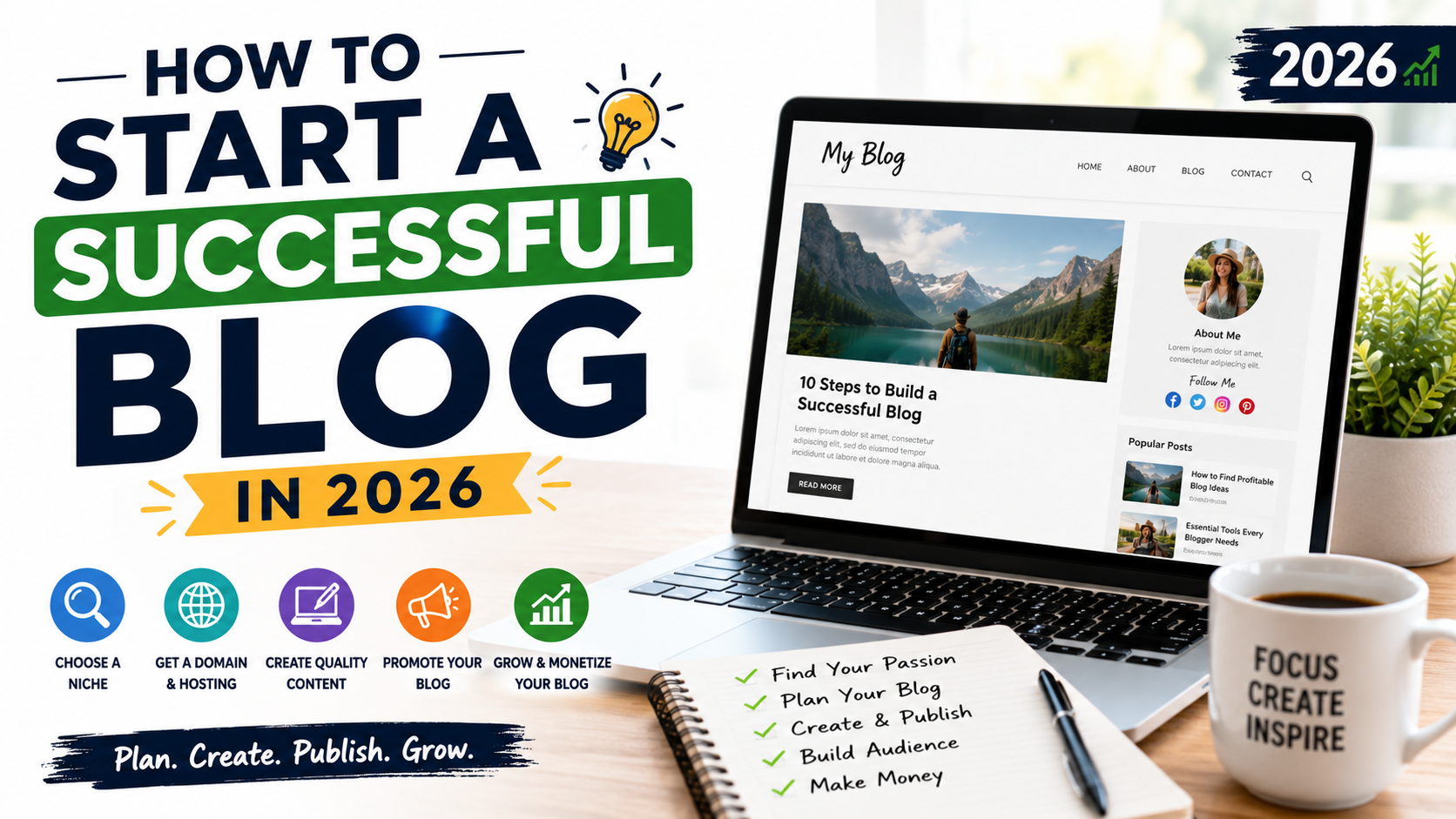
Learn how to start a successful blog in 2026 with this beginner-friendly guide. Discover how to choose a niche, create quality content, optimise for SEO, grow your audience, and earn money from your blog.
Blogging continues to be one of the best ways to share knowledge, build a personal brand, and generate income online. While the blogging industry has become more competitive, there are still countless opportunities for beginners who are willing to create valuable content and stay consistent.
Starting a successful blog in 2026 requires more than simply publishing articles. You need the right niche, a well-designed website, a solid content strategy, and an understanding of search engine optimisation (SEO). This guide explains every important step to help you build a successful blog from the ground up.
Choose the Right Blogging Niche
Your niche is the foundation of your blog. Choosing a topic you enjoy and one that people actively search for increases your chances of long-term success.
Popular blogging niches include:
- Technology
- Personal finance
- Health and wellness
- Travel
- Food and recipes
- Education
- Digital marketing
- Lifestyle
- Gaming
- Home improvement
Choose a niche that balances your interests with audience demand.
Pick a Memorable Domain Name
Your domain name is your blog’s online identity.
When selecting a domain:
- Keep it short and easy to remember.
- Avoid numbers and hyphens.
- Choose a relevant name.
- Use a trusted domain extension such as .com when possible.
- Make it easy to spell and pronounce.
A professional domain builds credibility and trust.
Select Reliable Web Hosting
A good hosting provider keeps your website fast, secure, and available to visitors.
Look for hosting that offers:
- High uptime
- Fast loading speeds
- Free SSL certificate
- Automatic backups
- Good customer support
- Easy WordPress installation
Reliable hosting improves both user experience and SEO.
Install a Blogging Platform
WordPress remains one of the most popular blogging platforms because it is flexible and beginner-friendly.
Benefits include:
- Thousands of themes
- Large plugin library
- SEO-friendly structure
- Easy content management
- Strong community support
Choose a clean and responsive theme that looks good on both desktop and mobile devices.
Create High-Quality Content
Content is the most important part of any successful blog.
Focus on creating articles that are:
- Original
- Helpful
- Accurate
- Well-structured
- Easy to read
- Updated regularly
Answer common questions and provide practical solutions for your readers.
Learn Basic SEO
Search engine optimisation helps your blog appear in search results.
Important SEO practices include:
- Using relevant keywords naturally
- Writing clear headings
- Creating engaging meta descriptions
- Optimising images
- Adding internal links
- Building quality backlinks
- Improving page speed
Good SEO increases your chances of attracting organic traffic.
Publish Consistently
Consistency is one of the biggest factors in blogging success.
Create a publishing schedule, such as:
- One article per week
- Two articles per week
- Weekly updates
- Monthly in-depth guides
Regular publishing keeps your audience engaged and signals activity to search engines.
Optimise for Mobile Users
Most internet users browse websites on smartphones.
Ensure your blog:
- Loads quickly
- Has responsive design
- Uses readable fonts
- Has easy navigation
- Displays images correctly on small screens
A mobile-friendly website improves user experience and search rankings.
Promote Your Blog
Publishing content is only the beginning.
Promote your articles through:
- Social media
- Email newsletters
- Online communities
- Forums
- Guest blogging
- Content sharing platforms
Promotion helps attract new readers and build an audience.
Build an Email List
Email marketing allows you to stay connected with your readers.
Benefits include:
- Announcing new posts
- Sharing exclusive content
- Building loyal followers
- Promoting products or services
- Increasing repeat visitors
Offer valuable content or free resources to encourage subscriptions.
Improve Website Speed
A fast website creates a better experience for visitors.
Ways to improve speed include:
- Compressing images
- Using caching
- Choosing quality hosting
- Removing unnecessary plugins
- Using a content delivery network (CDN)
Faster websites often perform better in search engines.
Monetise Your Blog
Once your blog receives regular traffic, there are several ways to earn income.
Popular monetisation methods include:
- Display advertising
- Affiliate marketing
- Sponsored posts
- Selling digital products
- Online courses
- Memberships
- Freelance services
- Consulting
Choose monetisation methods that fit your audience and niche.
Track Your Performance
Understanding your audience helps improve your content strategy.
Monitor important metrics such as:
- Page views
- Organic traffic
- Bounce rate
- Average session duration
- Returning visitors
- Popular articles
Regular analysis helps identify what works best.
Avoid Common Blogging Mistakes
Many beginners make avoidable mistakes.
Common examples include:
- Choosing a niche only because it is popular
- Publishing low-quality articles
- Ignoring SEO
- Giving up too early
- Copying content
- Using too many advertisements
- Neglecting website speed
- Not promoting new articles
Learning from these mistakes increases your chances of long-term success.
Stay Patient and Keep Learning
Successful blogs rarely grow overnight.
Continue improving by:
- Learning new SEO techniques
- Updating old articles
- Following industry trends
- Listening to reader feedback
- Experimenting with new content formats
Long-term consistency often produces the best results.
Sources
- https://wordpress.org
- https://developers.google.com/search
- https://search.google.com/search-console
- https://developers.google.com/web/fundamentals
- https://blog.google
Conclusion
Starting a successful blog in 2026 requires careful planning, quality content, consistent publishing, and a willingness to keep learning. By choosing the right niche, building a professional website, optimising for search engines, and providing genuine value to readers, you can create a blog that continues to grow over time.
Remember that blogging is a long-term investment. Focus on helping your audience, improving your skills, and staying consistent, and your efforts can lead to lasting success.
Frequently Asked Questions (FAQs)
1. Is blogging still profitable in 2026?
Yes. Many bloggers continue to earn income through advertising, affiliate marketing, sponsored content, digital products, and other monetisation methods.
2. Do I need technical skills to start a blog?
No. Modern blogging platforms like WordPress make it possible for beginners to create and manage blogs without advanced technical knowledge.
3. How often should I publish blog posts?
Consistency matters more than frequency. Publishing one or two high-quality articles each week is a good starting point.
4. What is the best niche for a new blog?
The best niche is one that combines your knowledge or interest with topics that have ongoing reader demand.
5. How long does it take for a blog to grow?
Growth varies, but many blogs take several months or longer to build consistent traffic through quality content and SEO.
6. Can I start a blog for free?
Yes. Free blogging platforms exist, but a custom domain and reliable hosting provide greater control and a more professional appearance.
7. How do bloggers make money?
Common income sources include display ads, affiliate marketing, sponsored posts, digital products, memberships, and freelance services.
8. What is the biggest mistake new bloggers make?
One of the biggest mistakes is expecting immediate results. Building a successful blog usually requires patience, consistency, and continuous improvement.